Quick takes on Rogers Network outage executive summary

The Canadian Radio-television and Telecommunications Commission (CRTC) has posted an executive summary of a report on a major telecom outage that happened in 2022 to Rogers Communications, which is one of the major Canadian telecom companies.

The full report doesn’t seem to be available yet, and I’m not sure if it ever will be publicly released. I recommend you read the executive summary, but here are some quick impressions of mine.

Note that I’m not a network engineer (I’ve only managed a single rack of servers in my time), so I don’t have any domain expertise here.

Migration!

When you hear “large-scale outage”, a good bet is that involved a migration. The language of the report describes it as an upgrade, but I suspect this qualifies as a migration.

In the weeks leading to the day of the outage on 8 July 2022, Rogers was executing on a seven-phase process to upgrade its IP core network. The outage occurred during  the sixth phase of this upgrade process.

I don’t know anything about what’s involved a telecom upgrading its IP core network, but I do have a lot of general opinions about migrations, and I’m willing to bet they apply here as well.

I think of migrations as high-impact, bespoke changes that the system was not originally designed to accommodate.

They’re high-impact because things can go quite badly if something goes wrong. If you’ve worked at a larger company, you’ve probably experienced migrations that seem to take forever, and this is one of the reasons why: there’s a lot of downside risk in doing migration work (and often not much immediate upside benefit for the people who have to do the work, but that’s a story for another day).

Migrations are bespoke in the sense that each migration is a one-off. This makes migrations even more dangerous because:

  • The organization doesn’t have any operational muscles around doing any particular migration, because each one is new.
  • Because each migration is unique, it’s not worth the effort to build tooling to support doing the migration. And even if you build tools, those tools will always be new, which means they haven’t been hardened through production use.

There’s a reason why you hear about continuous integration and continuous delivery but not continuous migration, even though every org past a certain age will have multiple migrations in flight.

Finally, migrations are changes that the system was not originally designed to accommodate. In my entire career, during the design of a new system, I have never heard anyone ask, “How are we going to migrate off of this new system at the end of its life?” We just don’t design for migrating off of things. I don’t even know if it’s possible to do so.

Saturation!

Rogers staff removed the Access Control List policy filter from the configuration of the distribution routers. This consequently resulted in a flood of IP routing information into the core network routers, which triggered the outage. The flood of IP routing data from the distribution routers into the core routers exceeded their capacity to process the information. The core routers crashed within minutes from the time the policy filter was removed from the distribution routers configuration. When the core network routers crashed, user traffic could no longer be routed to the appropriate destination. Consequently, services such as mobile, home phone, Internet, business wireline connectivity, and 9-1-1 calling ceased functioning.

Saturation is a term from resilience engineering which refers to a system receiving being pushed to the limit of the amount of load that it can handle. It’s remarkable how many outages in distributed systems are related to some part of the system being overloaded, or hitting a rate limit, or exceeding some other limit. (For example, see Slack’s Jan 2021 outage). This incident is another textbook example of a brittle system, which falls over when it becomes saturated.

Perception of risk

I mentioned earlier that migrations are risky, and everyone knows migrations are risky. Roger engineers knew that as well:

Rogers had initially assessed the risk of this seven-phased process as “High.”

Ironically, the fact that the migration had gone smoothly up until that point led them to revise their risk assessment downwards.

However, as changes in prior phases were completed successfully, the risk assessment algorithm downgraded the risk level for the sixth phase of the configuration change to “Low” risk, including the change that caused the July 2022 outage.

I wrote about this phenomenon in a previous post, Any change can break us, but we can’t treat every change the same. The engineers gained confidence as they progressed through the migration, and things went well. Which is perfectly natural. In fact, this is one of the strengths of the continuous delivery approach: you build enough confidence that you don’t have to babysit every single deploy anymore.

But the problem is that we can never perfectly assess the risk in the system. And no matter how much confidence we build up, that one change that we believe is safe can end up taking down the whole system.

I should note that the report is pretty blame-y when it comes to this part:

 Downgrading the risk assessment to “Low” for changing the Access Control List filter in a routing policy contravenes industry norms, which require high scrutiny for such configuration changes, including laboratory testing before deploying in the production network.

I wish I had more context here. How did it make sense to them at the time? What sorts of constraints or pressures were they under? Hopefully the full report reveals more details.

Cleanup

Rogers staff deleted the policy filter that prevented IP route flooding in an effort to clean up the configuration files of the distribution routers. 

Cleanup work has many of the same risks as migration work: it’s high-impact and bespoke. Say “cleanup script” to an SRE and watch the reaction on their face.

But not cleaning up is also a risk! The solution can’t be “never do cleanup” in the same way it can’t be “never do migrations”. Rather, we need to recognize that this work always involve risk trade-offs. There’s no safe path here.

Failure mode makes incident response harder

At the time of the July 2022 outage, Rogers had a management network that relied on the Rogers IP core network. When the IP core network failed during the outage, remote Rogers employees were unable to access the management network. …

Rogers staff relied on the company’s own mobile and Internet services for connectivity to communicate among themselves. When both the wireless and wireline networks failed, Rogers staff, especially critical incident management staff, were not able to communicate effectively during the early hours of the outage. 

When an outage affects not just your customers but also your engineers doing incident response, life gets a whole lot harder.

This brings to mind the Facebook outage from 2021:

[A]s our engineers worked to figure out what was happening and why, they faced two large obstacles: first, it was not possible to access our data centers through our normal means because their networks were down, and second, the total loss of DNS broke many of the internal tools we’d normally use to investigate and resolve outages like this. 

Component substitution fallacy

The authors point out that the system was not designed to handle this sort of overload:

Absence of router overload protection.  The July 2022 outage exposed the absence of overload protection on the core network routers. The network failure could have been prevented had the core network routers been configured with an overload limit that specifies the maximum acceptable number of IP routing data the router can support. However, the Rogers core network routers were not configured with such overload protection mechanisms. Hence, when the policy filter was removed from the distribution router, an excessive amount of routing data flooded the core routers, which led them to crash.

This is a great example of the component substitution fallacy, which fails to acknowledge explicit trade-offs that are made within organizations about which parts of the system to work on. Note that the Rogers engineers will certainly build in router overload protection now, but it means that’s engineering effort that won’t be spent building protections against other failure modes that haven’t happened yet.

Acknowledging trade-offs

To the authors’ credit, they explicitly acknowledge the tradeoffs involved in the overall design of the system.

The Rogers network is a national Tier 1 network and is architecturally designed for reliability; it is typical of what would be expected of such a Tier 1 service provider network. The July 2022 outage was not the result of a design flaw in the Rogers core network architecture. However, with both the wireless and wireline networks sharing a common IP core network, the scope of the outage was extreme in that it resulted in a catastrophic loss of all services. Such a network architecture is common to many service providers and is an example of the trend of converged wireline and wireless telecom networks. It is a design choice by service providers, including Rogers, that seeks to balance cost with performance.

I really hope the CRTC eventually releases the full report, I’m looking forward to reading it.

The error term isn’t Pareto distributed

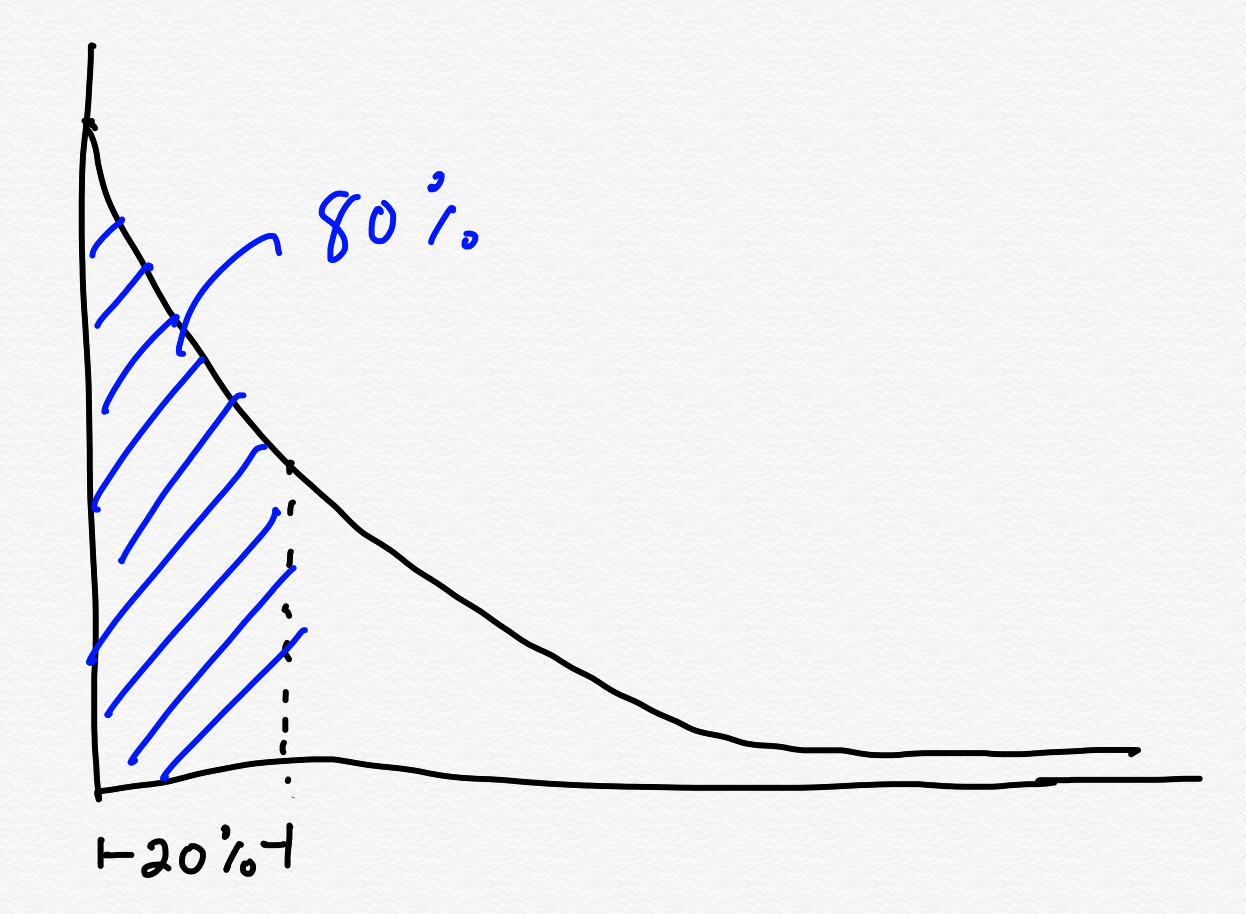
You’re probably familiar with the 80-20 rule: when 80% of the X stems from only 20% of the Y. For example, 80% of your revenue comes from only 20% of your customer, or 80% of the logs that you’re storing are generated from only 20% of the services. Talk to anybody who is looking to reduce cloud costs in their organization, and chances are they’re attacking the problem by looking for the 20% of services that are generating 80% of the costs, rather than trying to reduce cloud usage uniformly across all services.

Not all phenomena follow the 80-20 rule, but it’s common enough in the systems we encounter that it’s a good rule of thumb. The technical term for it is the Pareto principle, and distributions that exhibit this 80-20 phenomena are an example of Pareto distributions, also known as power law distributions.

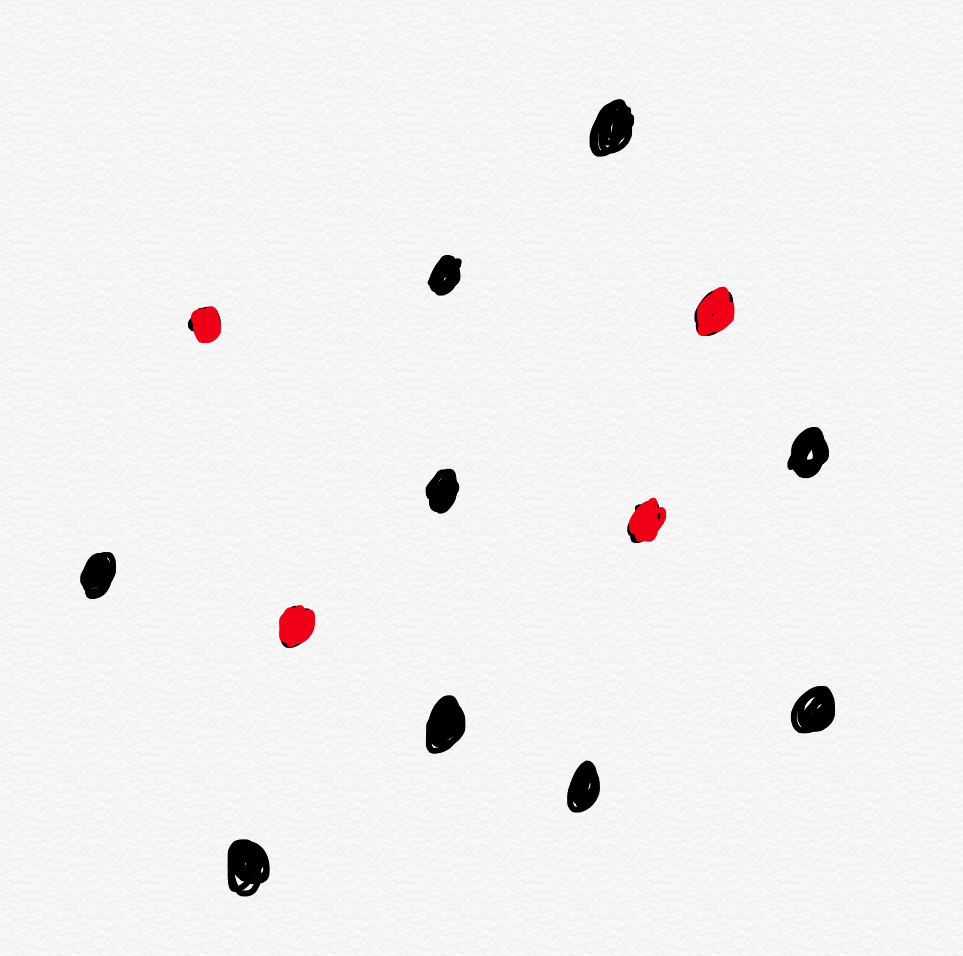
A common implicit assumption is that availability problems are Pareto-distributed. If you look at incidents and keep track of their causes, you should be able to identify a small number of causes that lead to the majority of the incidents. Because of this, we should attribute a cause to an incident, and then look to see which causes most often contribute to incident in order to identify interventions that will have the largest impact: those 20% of improvements that should yield 80% improvements. If you believe in the RCA (root cause analysis) model of incidents, that’s a reasonable assumption to make: identify the root cause of each incident, track these across incidents, and then invest in projects that attack the most expensive root causes.

If we can identify the problematic red dots, we can achieve significant improvements

But if you’re a frequent reader of this blog, you know there’s an alternative model of how incidents come to be. I’m fond of referring to the alternative as the LFI (learning from incidents) model. However, in the safety science research community this alternative model is more commonly associated with terms such as the New View, the New Look, or Safety-II.

The contrast of the LFI model with the RCA model is captured well in Richard Cook’s famous monograph, How Complex Systems Fail:

Post-accident attribution accident to a ‘root cause’ is fundamentally wrong.

Because overt failure requires multiple faults, there is no isolated ‘cause’ of an accident. There are multiple contributors to accidents. Each of these is necessary insufficient in itself to create an accident. Only jointly are these causes sufficient to create an accident. Indeed, it is the linking of these causes together that creates the circumstances required for the accident.

In this model, incidents don’t happen because of a single cause: rather, it’s through the interaction of multiple contributors.

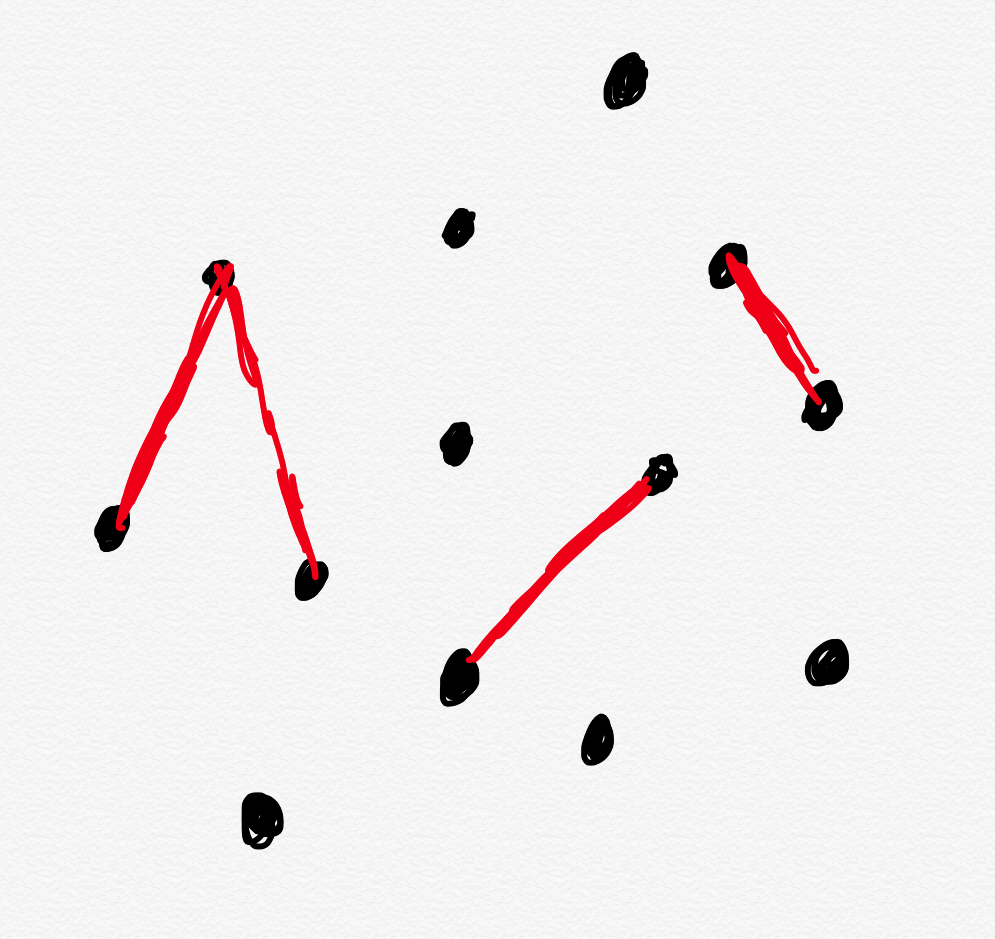
If incidents stem from problematic interactions rather than problematic components, then focusing on components will lead us astray

Under an incident model where incidents are a result of interactions, we wouldn’t expect there to be a Pareto distribution of causes. This means that if we look at a distribution of incidents by contributor (or cause, or component), we’re unlikely to see any one of these stand out as being the source of a large number of incidents. Instead, by looking at the components instead of the interactions, we’re unlikely to see much of any pattern at all.

Turning back to How Complex Systems Fail again:

Complex systems are heavily and successfully defended against failure.

The high consequences of failure lead over time to the construction of multiple layers of defense against failure. These defenses include obvious technical components (e.g.
backup systems, ‘safety’ features of equipment) and human components (e.g. training, knowledge) but also a variety of organizational, institutional, and regulatory defenses (e.g. policies and procedures, certification, work rules, team training). The effect of these measures is to provide a series of shields that normally divert operations away from accidents.

All of these explicit and implicit components of the system work together to keep things up and running. You can think of this as a process that most of the time generates safety (or availability), but sometimes doesn’t. You can think of these failure cases as a sort of error or residual term, they’re the leftover, the weird cases at the edges of our system. I think treating incidents as an error term is a useful metaphor because we don’t fall into the trap of thinking about error terms as looking like Pareto distributions.

This doesn’t mean that there aren’t patterns of failure in our incidents: there absolutely are. But it means that the patterns we need to look for aren’t going to visible if we don’t ask the right questions. It’s the difference between asking “which services were involved?” and “what were the goal conflicts that the engineers were facing?

What if everybody did everything right?

In the wake of an incident, we want to answer the questions “What happened?” and, afterwards, “What should we do differently going forward?” Invariably, this leads to people trying to answer the question “what went wrong?”, or, even more specifically, the two questions:

  • What did we do wrong here?
  • What didn’t we do that we should have?

There’s an implicit assumption behind these questions that because there was a bad outcome, that there must have been a bad action (or an absence of a good action) that led to that outcome. It’s such a natural conclusion to reach that I’ve only ever seen it questioned by people who have been exposed to concepts from resilience engineering.

In some sense, this belief in bad outcomes from bad actions is like Aristole’s claim that heavier objects fall faster than lighter ones. Intuitively, it seems obvious, but our intuitions lead us astray. But in another sense, it’s quite different, because it’s not something we can test by running an experiment. Instead, the idea that systems fail because somebody did something wrong (or didn’t do something right) is more like a lens or a frame, it’s a perspective, a way of making sense of the incident. It’s like how the fields of economics, psychology, and sociology act as different lenses for making sense of the world: a sociological explanation of a phenomenon (say, the First World War) will be different from an economic explanation, and we will get different insights from the different lenses.

An alternative lens for making sense of an incident is to ask the question “how did this incident happen, assuming that everybody did everything right?” In other words, assume that everybody whose actions contributed to the incident made the best possible decision based on the information they had, and the constraints and incentives that were imposed upon them.

Looking at the incident from this perspective will yield will very different kinds of insights, because it will generate different types of questions, such as:

  • What information did people know in the moment?
  • What were the constraints that people were operating under?

Now, I personally believe that the second perspective is strictly superior to the first, but I acknowledge that this is a judgment based on personal experience. However, even if you think the first perspective also has merit, if you truly want to maximize the amount of insight you get from a post-incident analysis, then I encourage you to try to the second perspective as well. Make the claim “Let’s assume everybody did everything right. How could this incident still have happened?” I guarantee, you’ll learn something new about your system that you didn’t know before.

Any change can break us, but we can’t treat every change the same

Here are some excerpts from an incident story told by John Allspaw about his time at Etsy (circa 2012), titled Learning Effectively From Incidents: The Messy Details.

In this story, the site goes down:

September 2012 afternoon, this is a tweet from the Etsy status account saying that there’s an issue on the site… People said, oh, the site’s down. People started noticing that the site is down.

Possibly the referenced issue?

This is a tough outage: the web servers are down so hard that they aren’t even reachable:

And people said, well, actually it’s going to be hard to even deploy because we can’t even get to the servers. And people said, well, we can barely get them to respond to a ping. We’re going to have to get people on the console, the integrated lights out for hard reboots. And people even said, well, because we’re talking about hundreds of web servers. Could it be faster, we could even just power cycle these. This is a big deal here. So whatever it wasn’t in the deploy that caused the issue, it made hundreds of web servers completely hung, completely unavailable.

One of the contributors? A CSS change to remove support for old browsers!

And one of the tasks was with the performance team and the issue was old browsers. You always have these workarounds because the internet didn’t fulfill the promise of standards. So, let’s get rid of the support for IE version seven and older. Let’s get rid of all the random stuff. …
And in this case, we had this template-based template used as far as we knew everything, and this little header-ie.css, was the actual workaround. And so the idea was, let’s remove all the references to this CSS file in this base template and we’ll remove the CSS file.

How does a CSS change contribute to a major outage?

The request would come in for something that wasn’t there, 404 would happen all the time. The server would say, well, I don’t have that. So I’m going to give you a 404 page and so then I got to go and construct this 404 page, but it includes this reference to the CSS file, which isn’t there, which means I have to send a 404 page. You might see where I’m going back and forth, 404 page, fire a 404 page, fire a 404 page. Pretty soon all of the 404s are keeping all of the Apache servers, all of the Apache processes across hundreds of servers hung, nothing could be done.

I love this story because a CSS change feels innocuous. CSS just controls presentation, right? How could that impact availability? From the story (emphasis mine)

And this had been tested and reviewed by multiple people. It’s not all that big of a deal of a change, which is why it was a task that was sort of slated for the next person who comes through boot camp in the performance team.

The reason a CSS change can cascade into an outage is that in a complex system there are all of these couplings that we don’t even know are there until we get stung by them.

One lesson you might take away from this story is “you should treat every proposed change like it could bring down the entire system”. But I think that’s the wrong lesson. The reason I think so is because of another constraint we all face: finite resources. Perhaps in a world where we always had an unlimited amount of time to make any changes, we could take this approach. But we don’t live in that world. We only have a fixed number of hours in a week, which means we need to budget our time. And so we make judgment calls on how much time we’re going to spend on manually validating a change based on how risky we perceive that change to be. When I review someone else’s pull request, for example, the amount of effort I spend on it is going to vary based on the nature of the change. For example, I’m going to look more closely at changes to database schemas than I am to changes in log messages.

But that means that we’re ultimately going to miss some of these CSS-change-breaks-the-site kinds of changes. It’s fundamentally inevitable that this is going to happen: it’s simply in the nature of complex systems. You can try to add process to force people to scrutinize every change with the same level of effort, but unless you remove schedule pressure, that’s not going to have the desired effect. People are going to make efficiency-thoroughness tradeoffs because they are held accountable for hitting their OKRs, and they can’t achieve those OKR if they put in the same amount of effort to evaluate every single production change.

Given that we can’t avoid such failures, the best we can do is to be ready to respond to them.

“Human error” means they don’t understand how the system worked

One of the services that the Amazon cloud provides is called S3, which is a data storage service. Imagine a hypothetical scenario where S3 had a major outage, and Amazon’s explanation of the outage was “a hard drive failed”.

Engineers wouldn’t believe this explanation. It’s not that they would doubt that a hard drive failed; we know that hard drives fail all of the time. In fact, it’s precisely because hard drives are prone to failure, and S3 stays up, that they wouldn’t accept this as an explanation. S3 has been architected to function correctly even in the face of individual hard drives failing. While a failed hard drive could certainly be a contributor to an outage, it can’t be the whole story. Otherwise, S3 would constantly be going down. To say “S3 went down because a hard drive failed” is to admit “I don’t know how S3 normally works when it experiences hard drive failures”.

We accept “human error” as the explanation for failures of reliable systems. Now, I’m a bit of an extremist when it comes to the idea of human error, I believe it simply doesn’t exist. But, let’s put that aside for now, and assume that human error is a real thing, and people make mistakes. The thing is, humans are constantly making mistakes. Every day, in every organization, there are many people that are making many mistakes. The people who work on systems that stay up most of the time are not some sort of hyper-vigilant super-humans that make fewer mistakes than the rest of us. Rather, these people are embedded within systems that have evolved over time to be resistant to these sorts of individual mistakes.

As the late Dr. Richard Cook (no fan of the concept of “human error” himself) put it in How Complex Systems Fail: Complex systems are heavily and successfully defended against failure”. As a consequence of this, “Catastrophe requires multiple failures – single point failures are not enough.”

Reliable systems are error-tolerant. There are mechanisms within such systems to guard against the kinds of mistakes that people make on a regular basis. Ironically, these mechanisms are not necessarily designed into the system: they can evolve organically and invisibly. But they are there, and they are the reason that these systems stay up day after day.

What this means is that when someone attributes a failure to “human error”, it means that they do not see these defenses in the system, and so they don’t actually have an understanding of how all of these defenses failed in this scenario. When you hear “human error” as an explanation for why a system failed, you should think “this person doesn’t know how the system stays up.” Because without knowing how the system stays up, it is impossible to understand the cases where it comes down.

(I believe Cook himself said something to the effect of “human error is the point where they stopped asking questions”).

Accidents manage you

Here’s a a line I liked from episode 461 of Todd Conklin’s PreAccident Investigation Podcast. At around the 8:25 mark, Conklin says:

….accidents, in fact, aren’t preventable. Accidents manage you, so what you really manage is the capacity for the organization to fail safely.

The phrasing “accidents manage you” is great, because it drives home the fact that an incident is not something that we can control. When an incident happens, the system has, quite literally, gone out of control.

While there’s no action we can take that will prevent all incidents, there are things we can do in advance to limit the harm that result from these future incidents. We can build what Conklin calls capacity. This capacity to absorb risk is the thing that we have control over. But it doesn’t come for free: it requires an investment of time and resources.

Operating effectively in high surprise mode

When you deploy a service into production, you need to configure it with enough resources (e.g., CPU, memory) so that it can handle the volume of requests you expect it to receive. You’ll want to provision it so that it can service 100% of the requests when receiving the typical amount of traffic, and you probably want some buffer in there as well.

However, as a good operator, you also know that sometimes your service will receive an unexpected increase in traffic that’s a large enough to push your service beyond the resources that you’ve been provisioned for it, even with that extra buffer.

When your service is overloaded, even though it can’t service 100% of the requests, you want to design it so that it doesn’t simply keel over and service 0% of the requests. There are well-known patterns for designing a service to degrade gracefully in the face of overload, such that it can still service some requests, and that keep it from getting so overloaded that it can’t even recover when the traffic abates. These patterns include rate limiters and circuit breakers. Michael Nygard’s book Release It! is a great source for this, and the concepts he describes have been implemented in libraries such as Hystrix and Resilience4j.

You can think of “expected number of requests” and “too many requests” as two different modes of operation of your service: you want to design it so that it performs well in both modes.

A service switching operational modes from “normal amount of requests” to “too many requests”

Now, imagine in the graph above, instead of the y-axis being “number of requests seen by the service”, it’s “degree of surprise experienced by the operators”.

As we humans navigate the world, we are constantly taking in sensory input. Imagine if I asked you, at regular intervals, “On a scale of 1-10, how surprised are you about your current observations of the world?”, and I plotted it on a graph like the one above. During a typical day, the way we experience the world isn’t too surprising. However, every so often, our observations of the world just don’t make sense to us. The things we’re seeing just shouldn’t be happening, given our mental models of how the world works. When it’s the software’s behavior that’s surprising, and that surprising behavior has a significant negative impact on the business, we call it an incident.

And, just like a software service behaves differently under a very high rate of inbound requests than it does from the typical rate, your socio-technical system (which includes your software and your people) is going to behave differently under high levels of surprise than it does under typical levels.

Similarly, just like you can build your software system to deal more effectively with overload, you can also influence your socio-technical system to deal more effectively with surprise. That’s really what the research field of resilience engineering is about: understanding how some socio-technical systems are more effective than others when working in high surprise mode.

It’s important to note that being more effective at high surprise mode is not the same as trying to eliminate surprises in the future. Adding more capacity to your software service enables it to handle more traffic, but it doesn’t help deal with the situation where the traffic exceeds even those extra resources. Rather, your system needs to be able to change what it does under overload. Similarly, saying “we are going to make sure we handle this scenario in the future” does nothing to improve your system’s ability to function effectively in high surprise mode.

I promise you, your system is going to enter high surprise mode in the future. The number of failure modes that you have eliminated does nothing to improve your ability to function well when this mode happens. While RCA will eliminate a known failure mode, LFI will help your system function better in high surprise mode.

Why LFI is a tough sell

There are two approaches to doing post-incident analysis:

  • the (traditional) root cause analysis (RCA) perspective
  • the (more recent) learning from incidents (LFI) perspective

In the RCA perspective, the occurrence of an incident has demonstrated that there is a vulnerability that caused the incident to happen, and the goal of the analysis is to identify and eliminate the vulnerability.

In the LFI perspective, an incident presents the organization with an opportunity to learn about the system. The goal is to learn as much as possible with the time that the organization is willing to devote to post-incident work.

The RCA approach has the advantage of being intuitively appealing. The LFI approach, by contrast, has three strikes against it:

  1. LFI requires more time and effort than RCA
  2. LFI requires more skill than RCA
  3. It’s not obvious what advantages LFI provides over RCA.

I think the value of LFI approach is based on assumptions that people don’t really think about because these assumptions are not articulated explicitly.

In this post, I’m going to highlight two of them.

Nobody knows how the system really works

The LFI approach makes the following assumption: No individual in the organization will ever have an accurate mental model about how the entire system works. To put it simply:

  • It’s the stuff we don’t know that bites us
  • There’s always stuff we don’t know

By “system” here, I mean the socio-technical system, which includes both the software and what it does, and the humans who do the work to develop and operate the system.

You’ll see the topic of incorrect mental models discussed in the safety literature in various ways. For example, David Woods uses the term miscalibration to describe incorrect mental models, and Diane Vaughan writes about structural secrecy, which is a mechanism that leads to incorrect mental models.

But incorrect mental models are not something we talk much about explicitly in the software world. The RCA approach implicitly assumes there’s only a single thing that we didn’t know: the root cause of the incident. Once we find that, we’re done.

To believe that the LFI approach is worth doing, you need to believe that there is a whole bunch of things about the system that people don’t know, not just a single vulnerability. And there are some things that, say, Alice knows that Bob doesn’t, and that Alice doesn’t know that Bob doesn’t know.

Better system understanding leads to better decision making in the future

The payoff for RCA is clear: the elimination of a known vulnerability. But the payoff for LFI is a lot fuzzier: if the people in the organization know more about the system, they are going to make better decisions in the future.

The problem with articulating the value is that we don’t know when these future decisions will be made. For example, the decision might happen when responding to the next incident (e.g., now I know how to use that observability tool because I learned from how someone else used it effectively in the last incident). Or the decision might happen during the design phase of a future software project (e.g., I know to shard my services by request type because I’ve seen what can go wrong when “light” and “heavy” requests are serviced by same cluster) or during the coding phase (e.g., I know to explicitly set a reasonable timeout because Java’s default timeout is way too high).

The LFI approach assumes that understanding the system better will advance the expertise of the engineers in the organization, and that better expertise means better decision making.

On the one hand, organizations recognize that expertise leads to better decision making: it’s why they are willing to hire senior engineers even though junior engineers are cheaper. On the other hand, hiring seems to be the only context where this is explicitly recognized. “This activity will advance the expertise of our staff, and hence will lead to better future outcomes, so it’s worth investing in” is the kind of mentality that is required to justify work like the LFI approach.

Resilience requires helping each other out

A common failure mode in complex systems is that some part of the system hits a limit and falls over. In the software world, we call this phenomenon resource exhaustion, and a classic example of this is running out of memory.

The simplest solution to this problem is to “provision for peak”: to build out the system so that it always has enough resources to handle the theoretical maximum load. Alas, this solution isn’t practical: it’s too expensive. Even if you manage to overprovision the system, over time, it will get stretched to its limits. We need another way to mitigate the risk of overload.

Fortunately, it’s rare for every component of a system to reach its limit simultaneously: while one component might get overloaded, there are likely other components that have capacity to spare. That means that if one component is in trouble, it can borrow resources from another one.

Indeed, we see this sort of behavior in biological systems. In the paper Allostasis: A Model of Predictive Regulation, the neuroscientist Peter Sterling explains why allostasis is a better theory than homeostasis. Readers are probably familiar with the term homeostasis: it refers to how your body maintains factors in a narrow range, like keeping your body temperature around 98.6°F. Allostasis, on the other hand, is about how your body predicts where these sorts of levels should be, based on anticipated need. Your body then takes action to modify the current state of these levels. Here’s Sterling explaining why he thinks allostasis is superior, referencing the idea of borrowing resources across organs (emphasis mine)

A second reason why homeostatic control would be inefficient is that if each organ self-regulated independently, opportunities would be missed for efficient trade-offs. Thus each organ would require its own reserve capacity; this would require additional fuel and blood, and thus more digestive capacity, a larger heart, and so on – to support an expensive infrastructure rarely used. Efficiency requires organs to trade-off resources, that is, to grant each other short-term loans.

The systems we deal with are not individual organisms, but organizations that are made up of groups of people. In organization-style systems, this sort of resource borrowing becomes more complex. Incentives in the system might make me less inclined to lend you resources, even if doing so would lead to better outcomes for the overall system. In his paper The Theory of Graceful Extensibility: Basic rules that govern adaptive systems, David Woods borrows the term reciprocity from Elinor Ostrom to describe this property in a system of one agent being willing to lend resources to another as a necessary ingredient for resilience (emphasis mine):

Will the neighboring units adapt in ways that extend the [capacity for maneuver] of the adaptive unit at risk? Or will the neighboring units behave in ways that further constrict the [capacity for maneuver] of the adaptive unit at risk? Ostrom (2003) has shown that reciprocity is an essential property of networks of adaptive units that produce sustained adaptability.

I couldn’t help thinking of the Sterling and Woods papers when reading the latest issue of Nat Bennett’s Simpler Machines newsletter, titled What was special about Pivotal? Nat’s answer is reciprocity:

This isn’t always how it went at Pivotal. But things happened this way enough that it really did change people’s expectations about what would happen if they co-operated – in the game theory, Prisoner’s Dilemma sense. Pivotal was an environment where you could safely lead with co-operation. Folks very rarely “defected” and screwed you over if you led by trusting them.

People helped each other a lot. They asked for help a lot. We solved a lot of problems much faster than we would have otherwise, because we helped each other so much. We learned much faster because we helped each other so much.

And it was generally worth it to do a lot of things that only really work if everyone’s consistent about them. It was worth it to write tests, because everyone did. It was worth it to spend time fixing and removing flakes from tests, because everyone did. It was worth it to give feedback, because people changed their behavior. It was worth it to suggest improvements, because things actually got better.

There was a lot of reciprocity.

Nat’s piece is a good illustration of the role that culture plays in enabling a resilient organization. I suspect it’s not possible to impose this sort of culture, it has to be fostered. I wish this were more widely appreciated.

Treating uncertainty as a first-class concern

One of the things that complex incidents have in common is the uncertainty that the responders experience while the incident is happening. Something is clearly wrong, that’s why an incident is happening. But it’s hard to make sense of the failure mode, on what precisely the problem is, based on the signals that we can observe directly.

Eventually, we figure out what’s going on, and how to fix it. By the time the incident review rolls around, while we might not have a perfect explanation for every symptom that we witnessed during the incident, we understand what happened well enough that the in-the-moment uncertainty is long gone.

Cooperative Advocacy: An Approach for Integrating Diverse Perspectives in Anomaly Response is a paper by Jennifer Watts-Englert and David Woods that compares two incidents involving NASA space shuttle missions: one successful and the other tragic. The paper discusses strategies for dealing with the authors call anomaly response, when something unexpected has happened. The authors describe a process they observed which they call Cooperative Advocacy for effectively dealing with uncertainty during an incident. They document how cooperative advocacy was applied in the successful NASA mission, and how it was not applied in the failed case.

It’s a good paper (it’s on my list!), and SREs and anyone else who deals with incidents will find it highly relevant to their work. For example, here’s a quote from the paper that I immediately connected with:

For anomaly response to be robust given all of the difficulties and complexities that can arise, all discrepancies must be treated as if they are anomalies to be wrestled with until their implications are understood (including the implications of being uncertain or placed in a difficult trade-off position). This stance is a kind of readiness to re-frame and is a basic building block for other aspects of good process in anomaly response. Maintaining this as a group norm is very difficult because following up on discrepancies consumes resources of time, workload, and expertise. Inevitably, following up on a discrepancy will be seen as a low priority for these resources when a group or organization operates under severe workload constraints and under increasing pressure to be “faster, better, cheaper”.

(See one of my earlier blog posts, chasing down the blipperdoodles).

But the point of this blog post isn’t to summarize this specific paper. Rather, it’s to call attention to the fact that anomaly response as a problem that we will face over and over again. Too often, we dismiss the anomaly we just faced in an incident as a weird, one-off occurrence. And while that specific failure mode likely will be a one-off, we’ll be faced with new anomalies in the future.

This paper treats anomaly response as a first-class entity, as a thing we need to worry about on an ongoing basis, as something we need to be able to get better at. We should do the same.